Square up the empty box
Align the side walls before closing the bottom flaps. A distorted box is harder to seal neatly and will sit unevenly afterwards. Check that every fold remains intact. A tear between the wall and base calls for another box, rather than an invisible repair beneath the contents.
On an interlocking base, all tabs must sit fully in their intended positions. Do not mistake a convenient-looking overlap for the manufacturer's locking arrangement. If instructions are missing or parts are damaged, establish the correct assembly before adding weight.
Give the tape enough surface contact
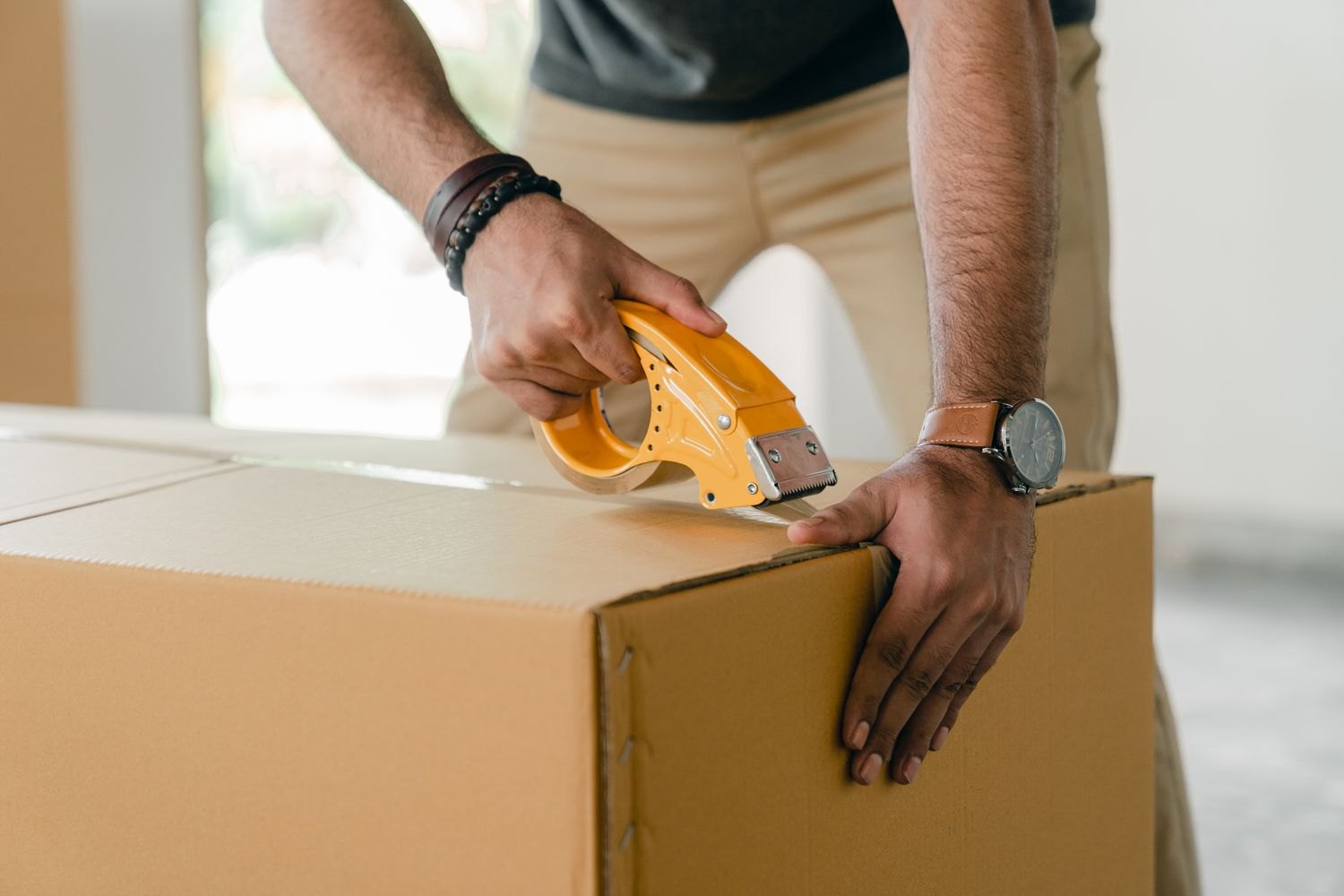
On a conventional box with meeting outer flaps, close the central seam as appropriate to its construction. Additional strips over the side edges can form an H-shaped closure where that method suits the box. Press every strip fully onto a clean, dry surface.
Do not apply only a short strip across the middle and leave its ends lifting. Tape needs contact across the seam and around the transitions. The precise method depends on the box and tape; several random layers do not replace careful assembly.
Check before filling
Turn the empty box upright and inspect the closed surfaces from inside. Small openings may let accessories escape, while larger gaps may indicate incorrect assembly. Add suitable cushioning without using it to conceal a defective base.
Start with a manageable amount of contents and watch whether the bottom keeps its shape. A bulging base is a reason to stop and divide the load. Later, carry the container according to its construction; a neat closure does not justify overloading it.