Use clean paper for direct contact
Choose clean, non-marking paper for crockery and delicate surfaces. Old newspaper can transfer ink, so it is not suitable for every direct wrapping task. Inspect reused sheets for grit, staples and other hard remnants as well.
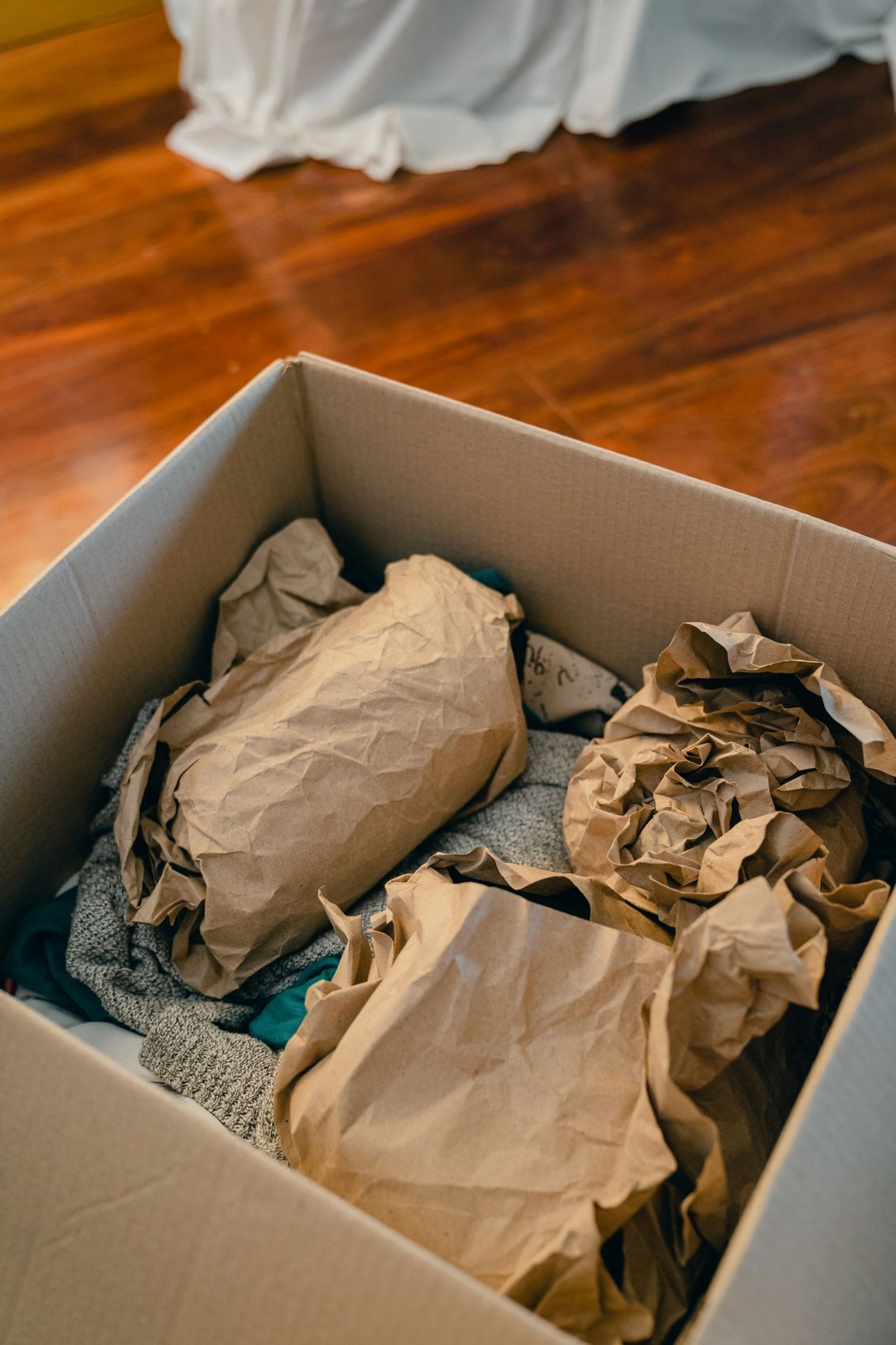
Wrap items individually wherever they would otherwise touch. Fold spare paper so edges and protruding parts remain covered. A thin layer fitted tightly around an object mainly separates its surface; it does not yet create meaningful distance from a hard box wall.
Cushioning needs some volume
Loosely crumple extra sheets when filling gaps. These pads should support the contents without distorting them. Very tightly compressed paper balls can press against a delicate rim. Check from several sides to see where the object actually makes contact.
Avoid unprotected contact at the base and outer walls. Paper alone may be unsuitable for heavy, fragile or particularly valuable objects. Choose an appropriate protective arrangement, such as purpose-designed internal packaging, rather than assuming ever more sheets will solve the problem.
Keep your supply clean while working
Lay flat sheets on a clear surface and collect used cushioning separately. This prevents you accidentally reaching for damp or dirty material. Cut sheets to size before wrapping when necessary; working with scissors beside an already wrapped object makes the task needlessly awkward.
Open every sheet fully during unpacking. Small lids, cutlery and accessories are easily hidden between folds. Clean sheets can be flattened and kept for future tasks. Set aside wet or heavily soiled paper according to local disposal guidance.