Let the surface guide the choice
Do not wrap an unfamiliar delicate finish directly in film. Paints, coatings and freshly treated materials may have particular requirements. Follow manufacturer instructions and use a suitable separating layer where needed. A blanket beneath the film can prevent contact, but must itself be clean and appropriate for the finish.
Wrap only dry parts. Enclosing damp furniture will not dry it. Treat film as a temporary aid for transport, rather than a universal answer for months of storage. For longer storage, assess the material and the storage environment separately.
Use only the tension needed
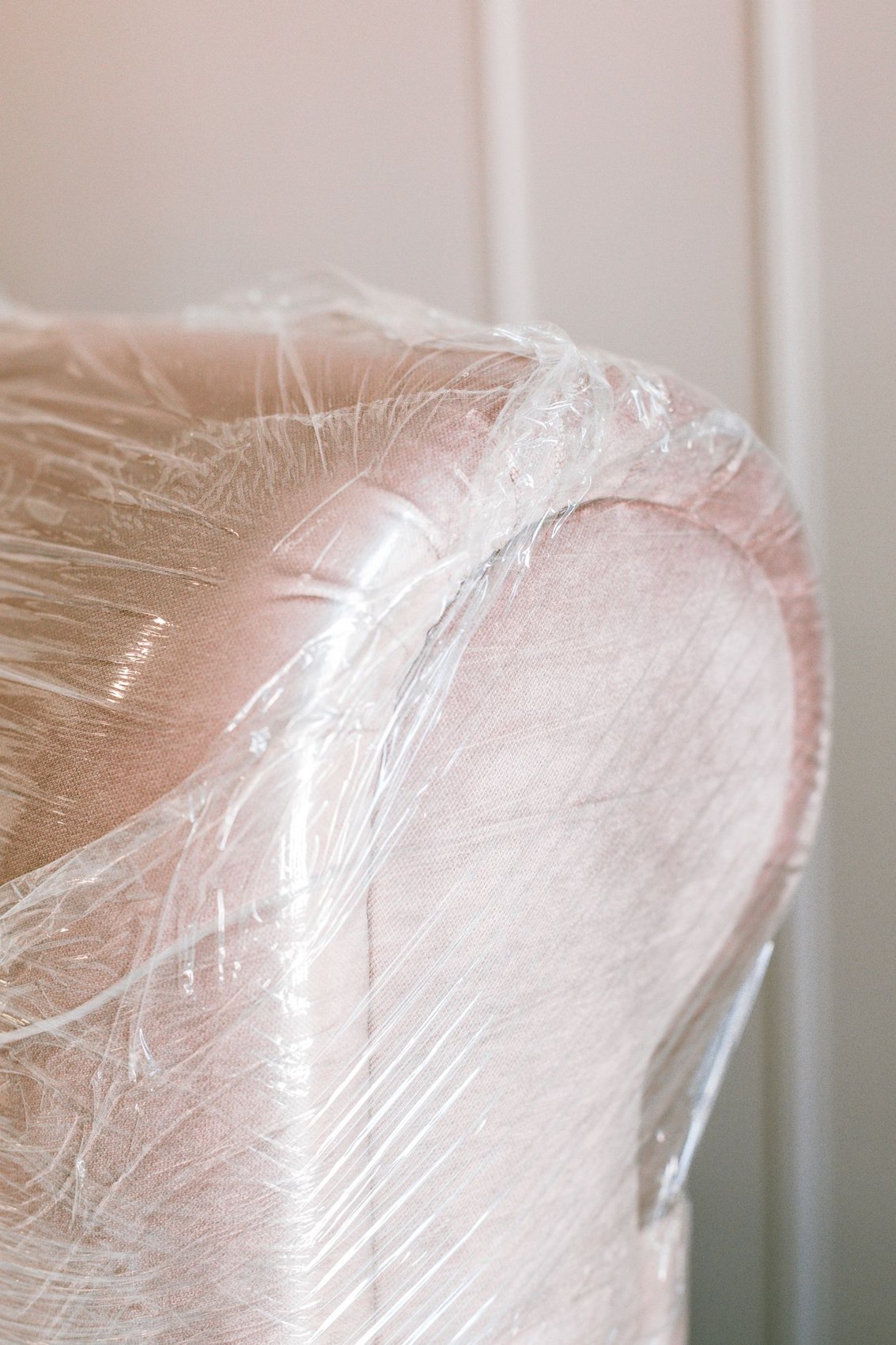
Hold an appropriate covering together without putting strong pressure on thin edges, handles or projecting parts. Film should not conceal damaged fittings that first need securing or removal. Do not pull harder simply because a drawer closes poorly; address the underlying problem first.
Never use the film as a carrying handle. Handle the package at its intended load-bearing points. Film also does not replace suitable securing methods inside the vehicle. A neatly wrapped object can still slide even when its blanket fits closely.
Prepare for opening
Leave the end where it can be found later, or mark an accessible opening point. When unpacking, do not cut blindly through multiple layers close to fabric or paint. Carefully lift the packaging away from the object and use a suitable tool with controlled clearance.
Collect removed film in a designated place immediately. Long loose strips become awkward on walking routes and should stay out of reach of small children and pets. Large undamaged pieces may occasionally be useful again; separate dirty scraps according to local guidance.