Separate surface protection from spacing
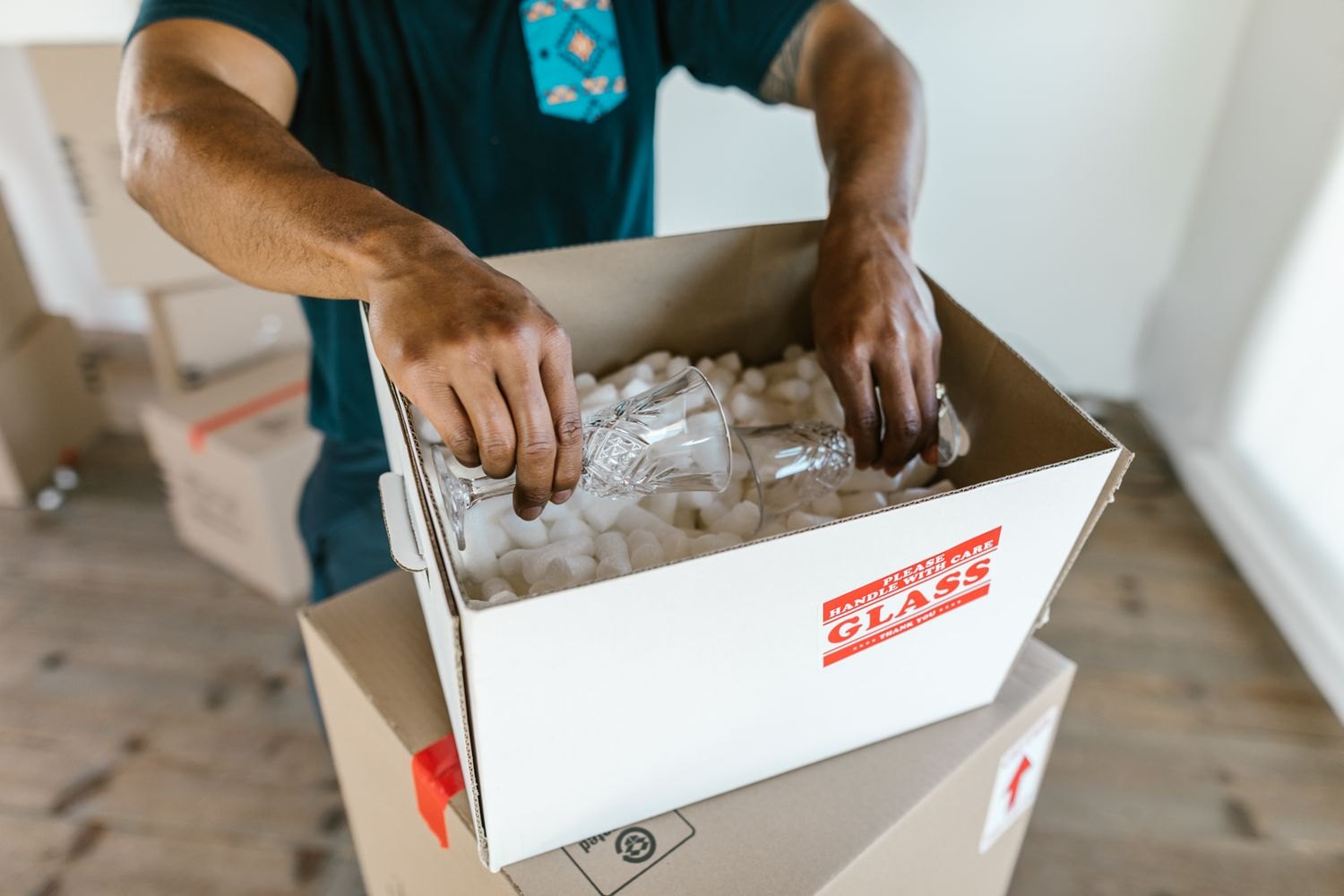
The immediate wrapping protects the object's surface. Material between that wrapping and the box performs another job: supporting its position. If a hard corner touches the outer wall, adding material on the opposite side does not make up for the missing clearance.
Check the arrangement underneath, at the sides and above the contents. Use clean, suitable material that cannot enter small openings in the object. Put loose accessories in their own bag or small inner box so they do not disappear into the cushioning.
Support rather than stuff
Add loosely formed paper pads a little at a time. Keep concentrated pressure away from delicate handles, thin rims and projecting controls. The object should remain in its intended position without being wedged between hard balls of material.
If filling would occupy almost the entire box, the format may be wrong. A smaller suitable container saves material and makes the arrangement easier to inspect. Conversely, do not make an undersized box appear suitable by stuffing everything tightly inside; cushioning needs space of its own.
Assess the closed arrangement
Fold the lid flaps into position as a trial. They should close flat without springing against the contents. A bulging lid makes the box difficult to stack and may transfer pressure. Remove material or contents, then review the arrangement.
Move the box carefully on its supporting surface rather than shaking it vigorously. Audible rattling or a rolling sensation reveals an unsecured area. Find the specific cause. Adding more material to an arbitrary gap achieves little if the actual problem is an unsupported corner.