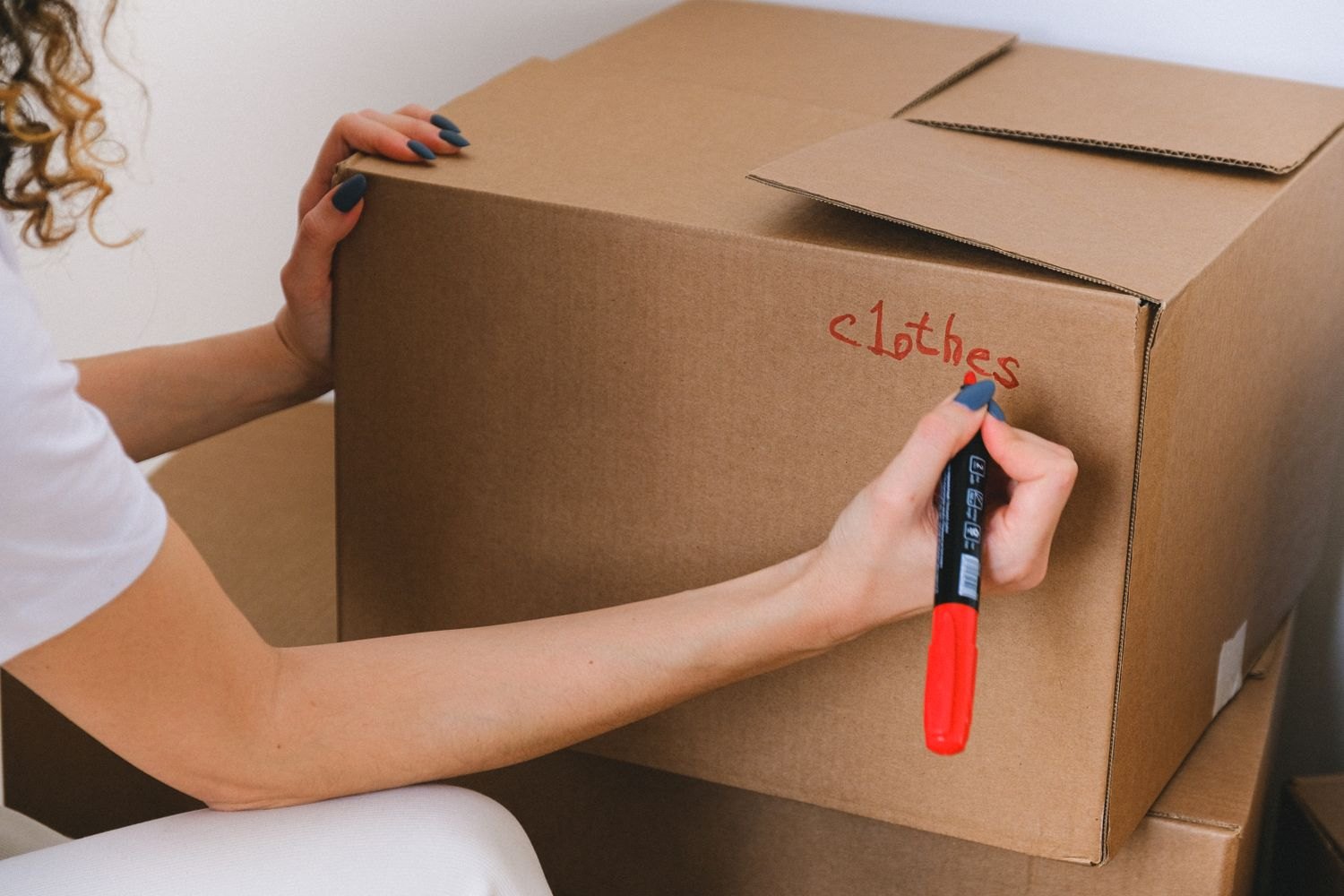
Lead with the destination
Write the room in the new home first. Use an unambiguous description such as “Study at rear” instead of “Room two” when helpers do not know your numbering system. Names or clearly assigned colours can distinguish two children's bedrooms. Put matching signs on the destination doors. Colour should support the words: helpers still need to identify a room in poor light or without distinguishing every colour.
Add a short description
Include two or three specific contents and a box number. “Bathroom – towels – 17” is easy to scan. The number connects the box to a fuller private inventory. Label the lid and at least two sides so people do not have to turn every box around. Choose a visible marker and test whether it dries properly on the surface without smudging during handling.
Use a few meaningful signals
Reserve extra instructions for useful distinctions such as “Open first”, “Fragile” or a required upright orientation. If every box is marked urgent, the priority disappears. A handling label cannot replace suitable packaging or restraint in the vehicle. Sensitive documents and valuable small belongings should not have detailed external descriptions. A neutral number linked to a private inventory is more appropriate for those contents.
Remove obsolete information
Completely cross out or cover previous destination labels on reused boxes. A small new sticker among several large old markings can easily send a box to the wrong room. Review the labels once boxes are stacked: can you see a destination, and is each number unique? If you change the contents later, update the outside and your inventory immediately. Consistent corrections keep the system useful through unpacking.
Keep your marker and spare labels accessible until the last box is packed.