Select by need and keep papers protected
Set aside documents relevant to this move: confirmed arrangements, contact details, appointment papers and personal identification. Add documents for other household members whose arrangements you are handling where necessary. Check beforehand whether an original or an available copy is required. Long-term archived bills can travel separately. Sorting by short-term access is more practical than putting every document that feels important into the same crowded folder.
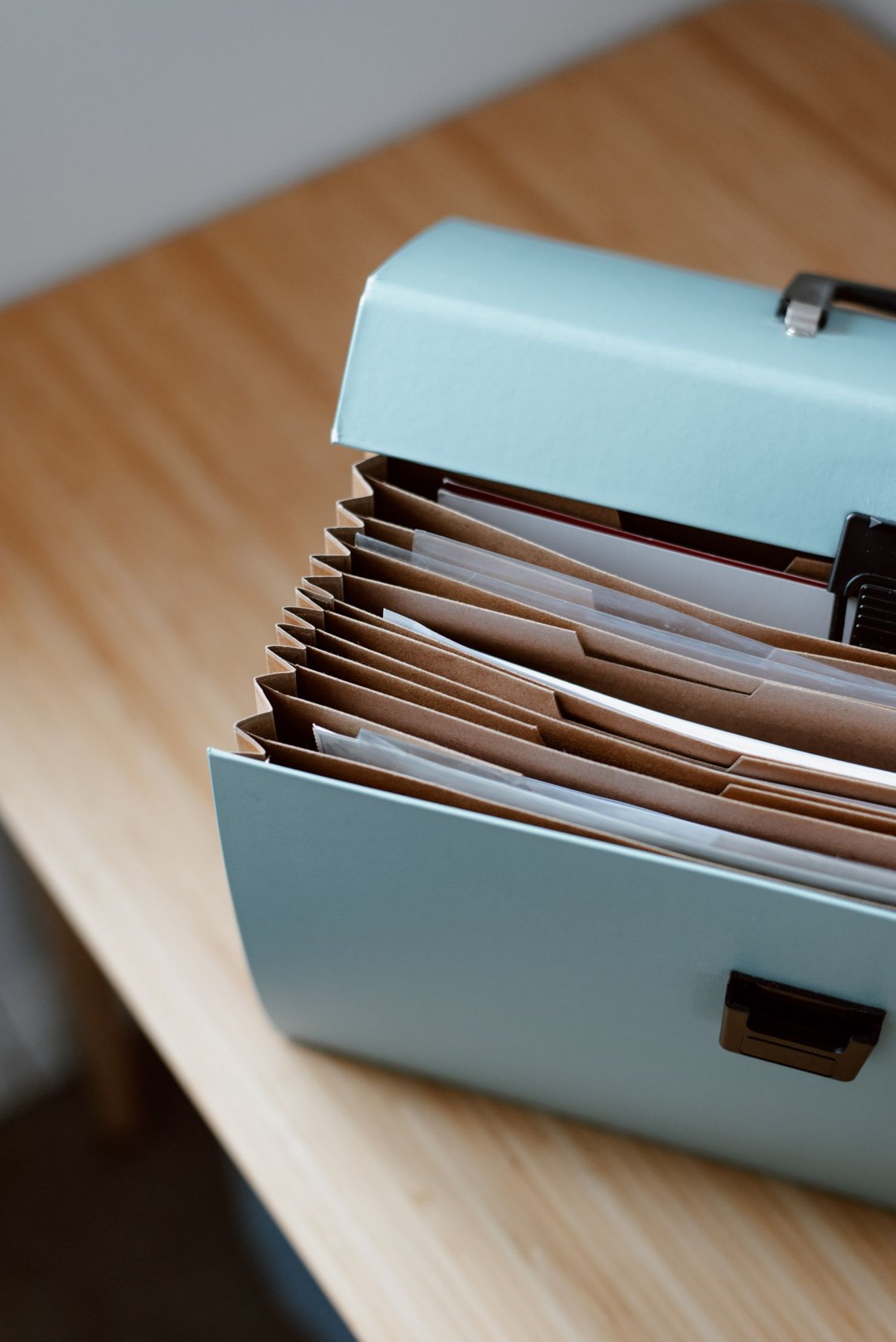
Use a firm folder with a few labelled sections. A suitable cover adds protection from spilled drinks, but does not automatically make the folder waterproof. Separate personal papers from printed working plans that helpers may take away. Loose keys and sharp tools do not belong between the pages. Keep the bag small enough to stay with your personal belongings rather than ending up in the vehicle because it takes too much space.
Check digital access early
Save useful contact details and confirmations offline where appropriate. Before leaving, test that files genuinely open without an internet connection. Protect sensitive information with your device's security features and share only what is needed. Passwords should not appear openly on a room plan. A digital copy can help you retrieve information, but it does not automatically replace a required original or access to a particular account.
Keep responsibility consistent
Choose who carries the document bag and keep that responsibility with the same person throughout the day. Do not leave it on changing windowsills or among toolboxes. Give it a fixed, protected place soon after reaching the new home. Once immediate appointments are complete, return papers to their normal filing system. The moving bag should not become a forgotten second archive holding important originals for months afterwards.