Inspect before wrapping
Group plates by size and check their rims for chips. Pack damaged pieces separately so a loose fragment cannot scratch other surfaces. Crockery must be clean and completely dry. Moisture can weaken paper and leave unpleasant marks during longer storage.
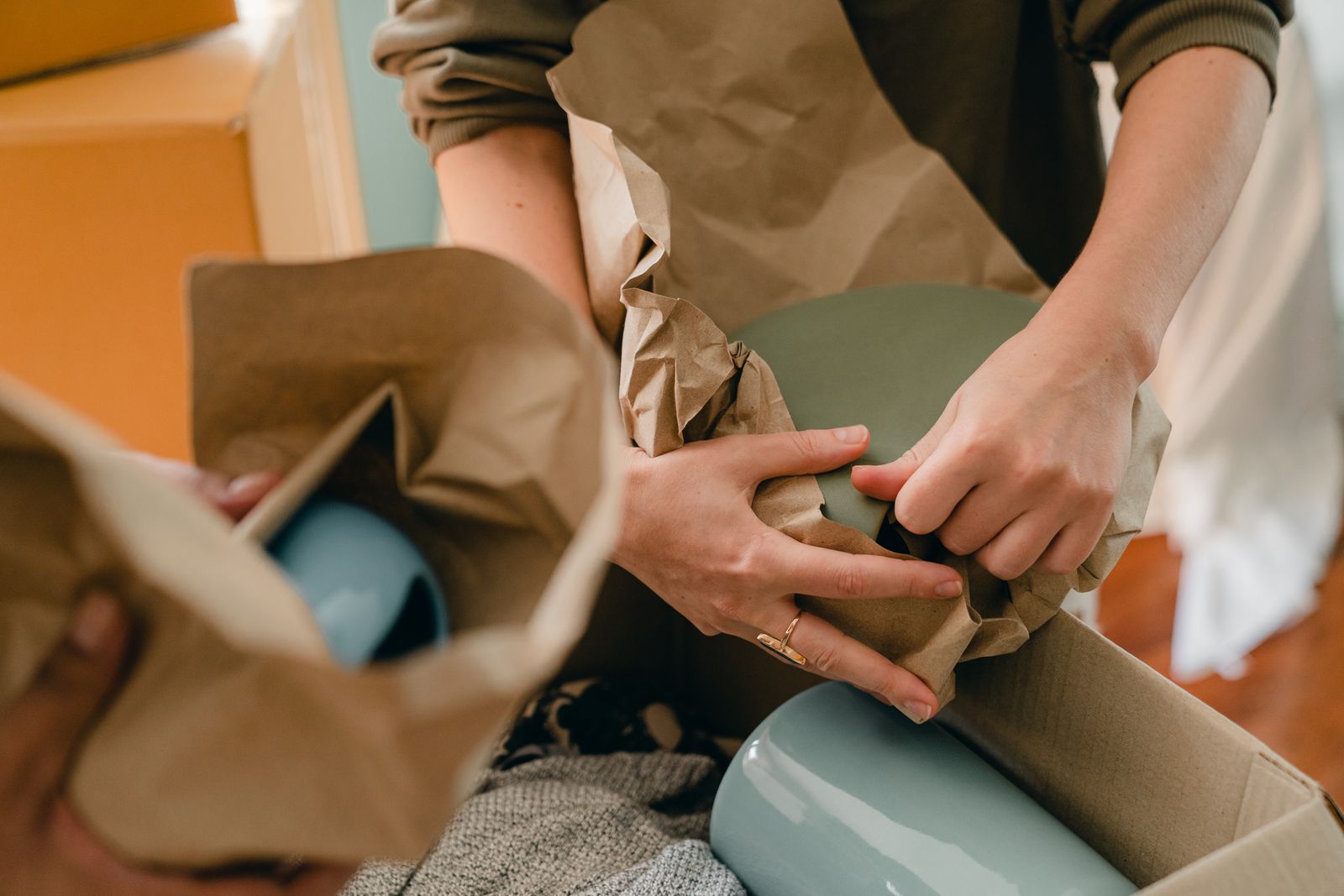
Use clean packing paper without ink that could transfer. Place a plate in the centre of several suitably large sheets and fold the paper around it from every side. Leave no exposed contact points around the rim or foot ring. One thin sheet may separate surfaces but provides very little cushioning against knocks.
Cushion the edges and build supported rows
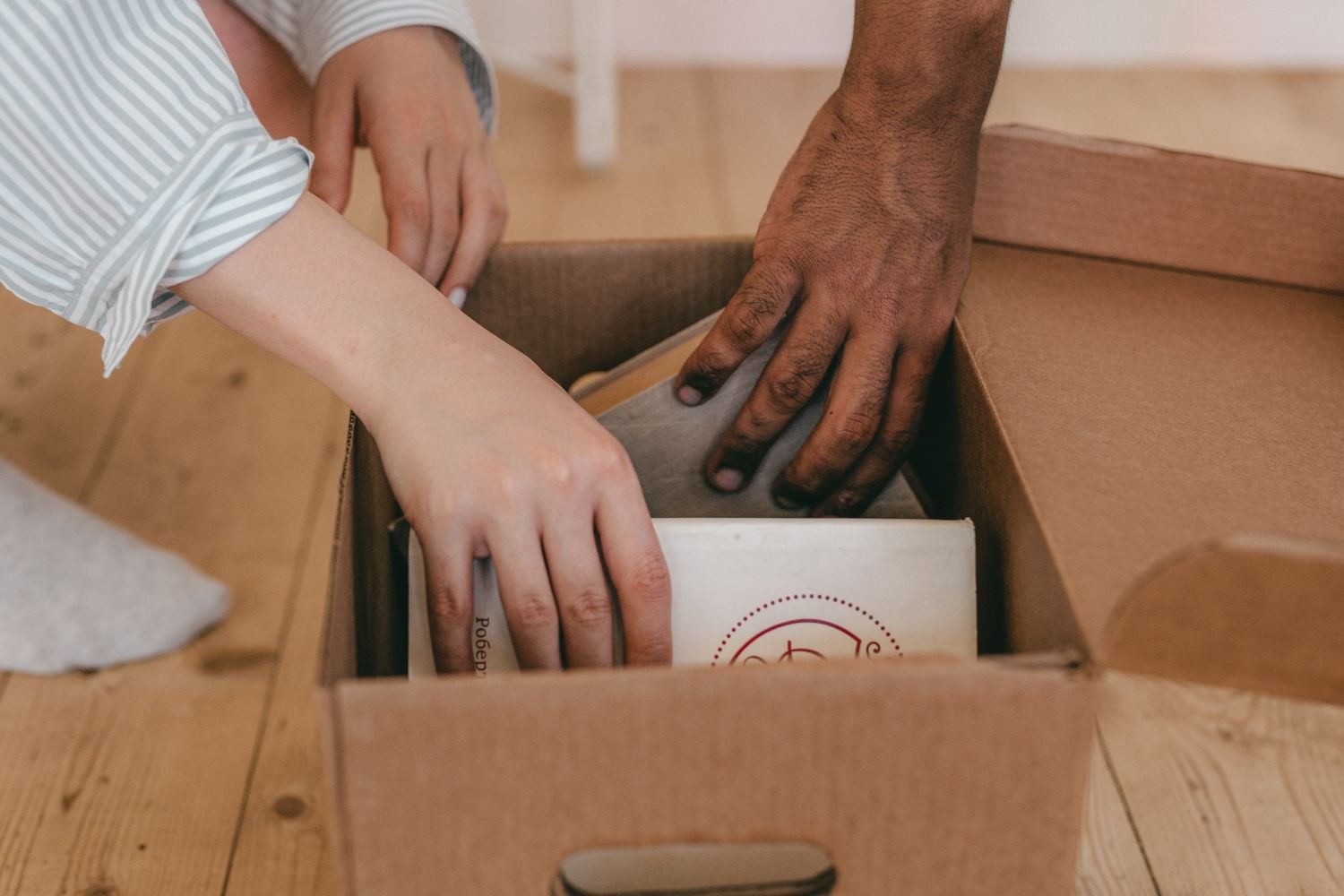
Prepare a sturdy, fairly small box with a springy layer of crumpled paper on the bottom. Place individually wrapped plates on their edges in a well-supported row where possible. They should neither press against the outer wall nor lean loosely. Purpose-made dish dividers can help if their compartments suit the plate size.
Fill spaces gently with crumpled paper. Do not force hard objects between the plates. Large serving platters may need their own packaging: if they project above the row or touch the lid, choose a separate box that fits them properly.
Check the weight and movement
As you pack, check whether you can still lift the box in a controlled way. A printed load rating is an upper limit under specified conditions, not a personal lifting recommendation. With heavy china, a second small box is often better than filling a large one completely.
Move the open box carefully a few centimetres along the floor. A clinking sound means there is still contact or room for movement. Add cushioning without putting the plates under pressure. Finish with another protective layer on top; the lid should close flat.
During transport and unpacking
Mark the box as fragile and add its destination room. A label alone will not protect it from heavy boxes placed above it. Position it where it can be secured against sliding. Later, open it on a clear work surface and unfold every sheet of paper before collecting the paper for reuse or disposal.