Sort by shape and condition
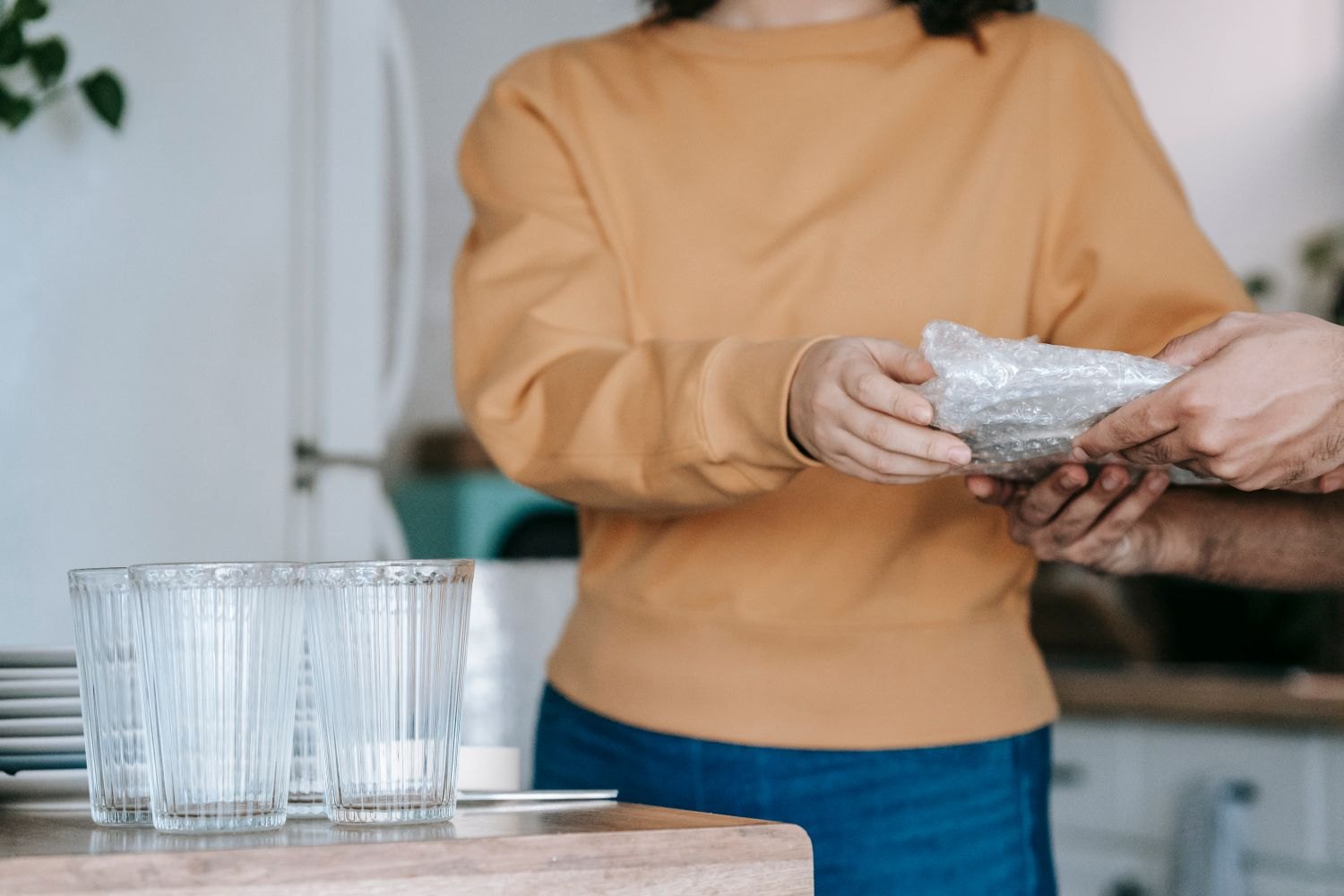
Separate sturdy water glasses, thin tumblers and stemware. Check rims and bases for existing damage. Handle chipped pieces separately so loose fragments cannot reach intact glassware. Everything should be clean and dry. Grouping similar heights makes cushioning easier; a very tall glass should not touch the lid of a box that otherwise looks correctly filled. Give unusually fragile pieces individual consideration before packing begins.
Wrap one glass at a time
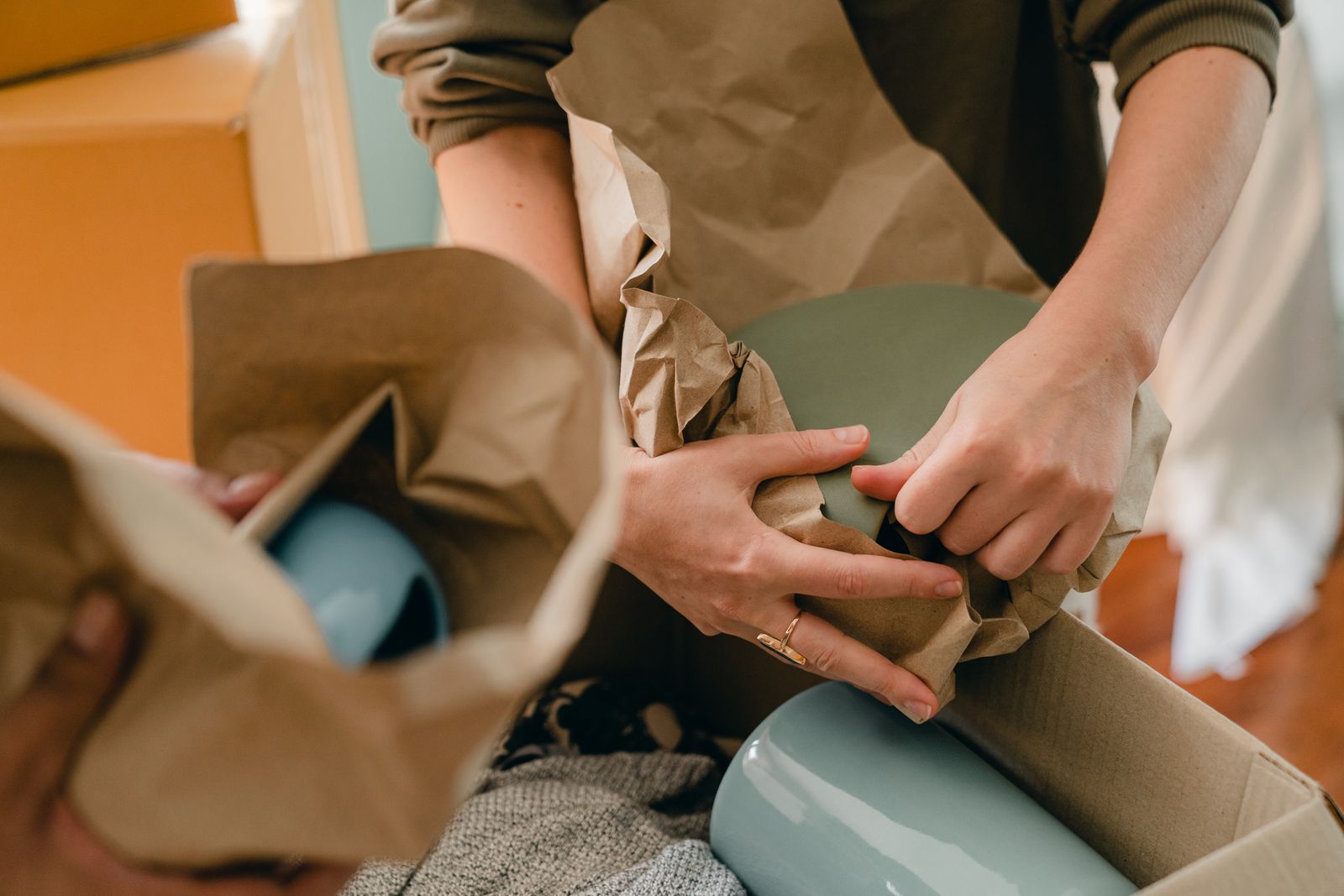
Lay the glass on clean packing paper and enclose it completely, without forcing paper tightly into the opening. Give stems and feet particular attention: cushioning should support delicate areas rather than put them under sideways strain. Keep adhesive tape on the packaging. For thin or valuable glass, suitable dividers or specialist individual packing are more appropriate than improvising a tightly packed group.
Create separate spaces
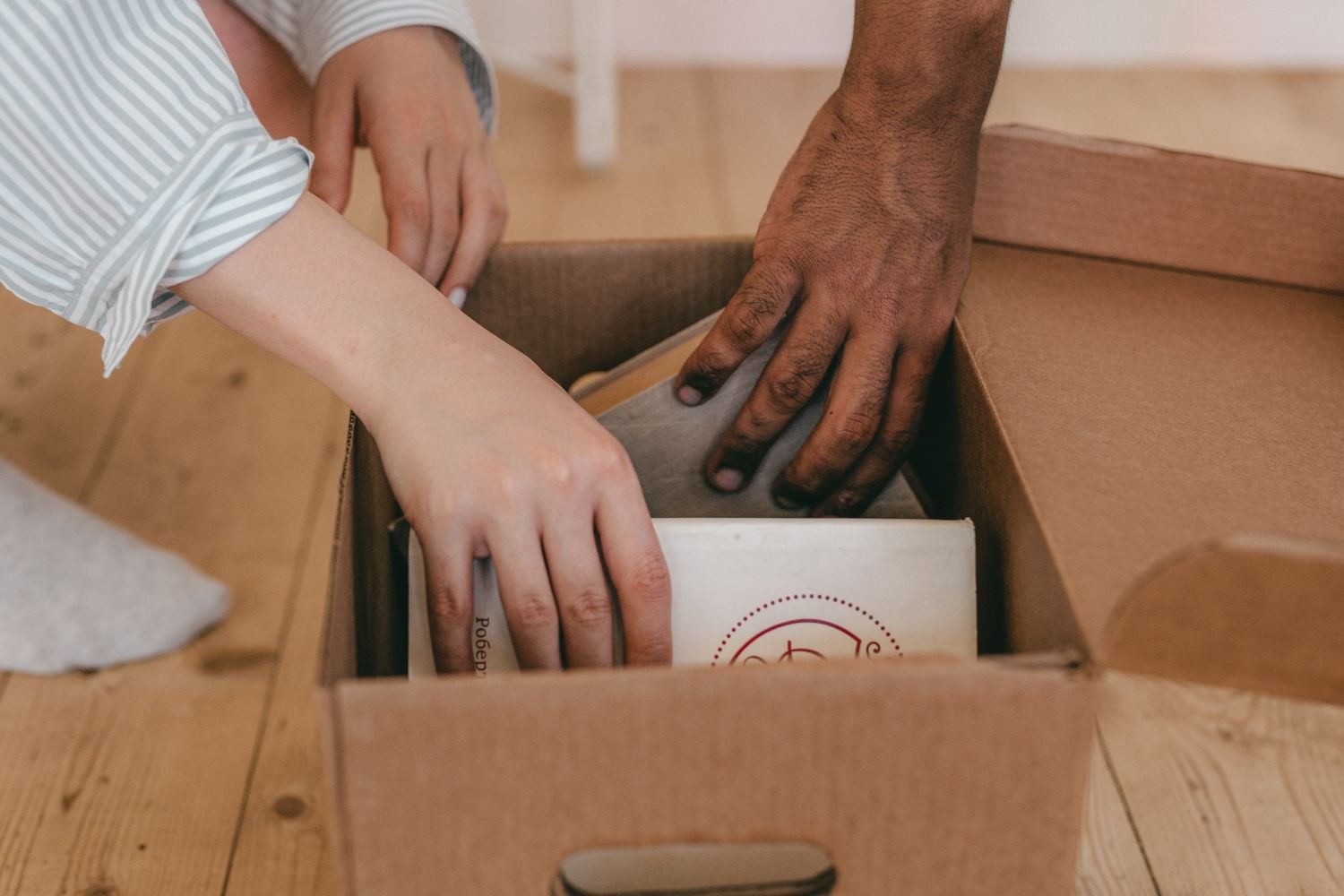
Cushion the bottom and place wrapped glasses away from the outer walls. Properly fitting compartments prevent direct contact, although they may still need additional cushioning. Fill gaps gently until the glasses remain stable. Do not add heavy kitchen equipment beside or above them. If you cannot safely separate and support a second layer, choose another small box instead of making the first box taller and more crowded.
Check before sealing
Listen for glass touching glass when you move the open box gently. Add cushioning where needed rather than compressing everything firmly together. The lid should close without pressure. Label the destination room and delicate contents, and plan a protected position in the vehicle. Unfold packing paper over a clear surface during unpacking; a small glass can remain hidden inside what appears to be an empty bundle.