Clear one working area
Choose an accessible section of worktop and remove packaging, dust and loose objects. Check that cupboards are clean and dry before filling them. Keep the route between the sink, worktop and doorway clear from the beginning.
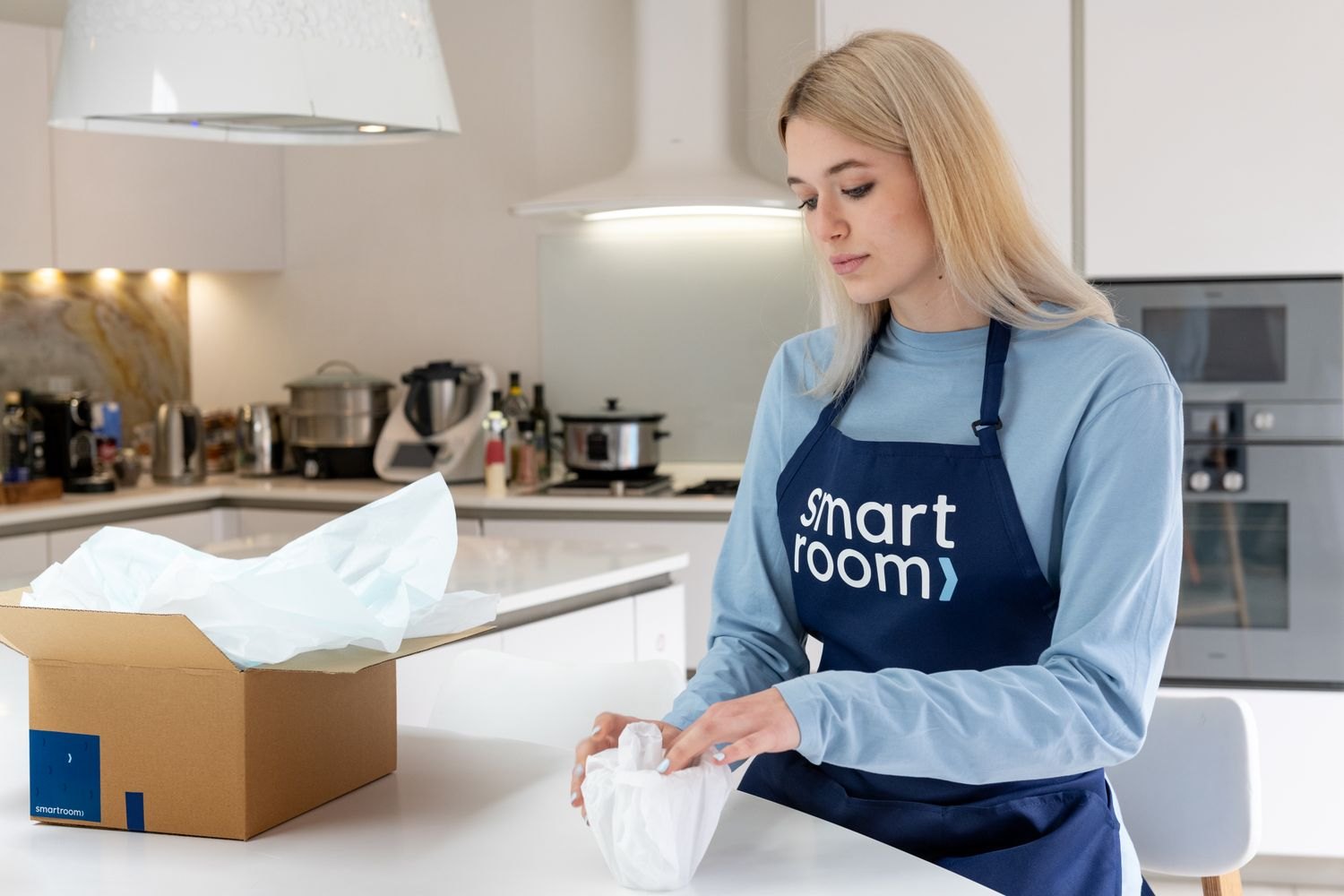
Bring in the box of everyday crockery first. A couple of plates, mugs and sets of cutlery per person will often cover the initial period. Avoid opening every kitchen box at once: several half-empty cartons quickly create another sorting project. Collect crumpled paper immediately in a separate empty box, away from your food preparation area.
Rehearse your first meal
Think about what you actually intend to prepare tomorrow morning. Breakfast and a simple supper may need a board, pan and knife, while baking tins can wait. Position these items close to where you will use them. Give knives suitable protected storage immediately rather than leaving them loose among discarded paper on a busy worktop.
Put heavy pans in lower cupboards that are comfortable to reach. Everyday glasses should be accessible without stretching awkwardly. Group food temporarily by use: breakfast supplies, dry cooking ingredients and drinks. Keep cleaning products separate. Use unfamiliar appliances or connections only after checking their instructions and ensuring that the intended installation is in place.
Leave occasional items packed
Label unopened boxes with their contents and a temporary location. Fondue equipment, celebration crockery and large serving dishes do not need permanent homes on the first evening. After two or three meals you will have a clearer idea of which cupboard arrangement works. Move individual groups then, instead of emptying the entire kitchen again.
Finish by checking the surfaces and openings. Is there room for a chopping board? Can you open the dishwasher, if you have one? Is there somewhere for used dishes? These practical questions matter more than the number of boxes emptied.