Use one place for incoming papers
Choose a shallow tray for newly received documents. It is a temporary working area, not an archive. Open and review papers regularly so time-sensitive tasks become visible. Do not leave confidential documents exposed in shared areas. A separate action folder prevents an important letter disappearing among old appliance manuals.
Write the next specific action on a removable note or in your task list. Phrases such as ask a question or add the missing document are more useful than important. For time-sensitive matters, record the relevant date from the document rather than relying on its position in the pile.
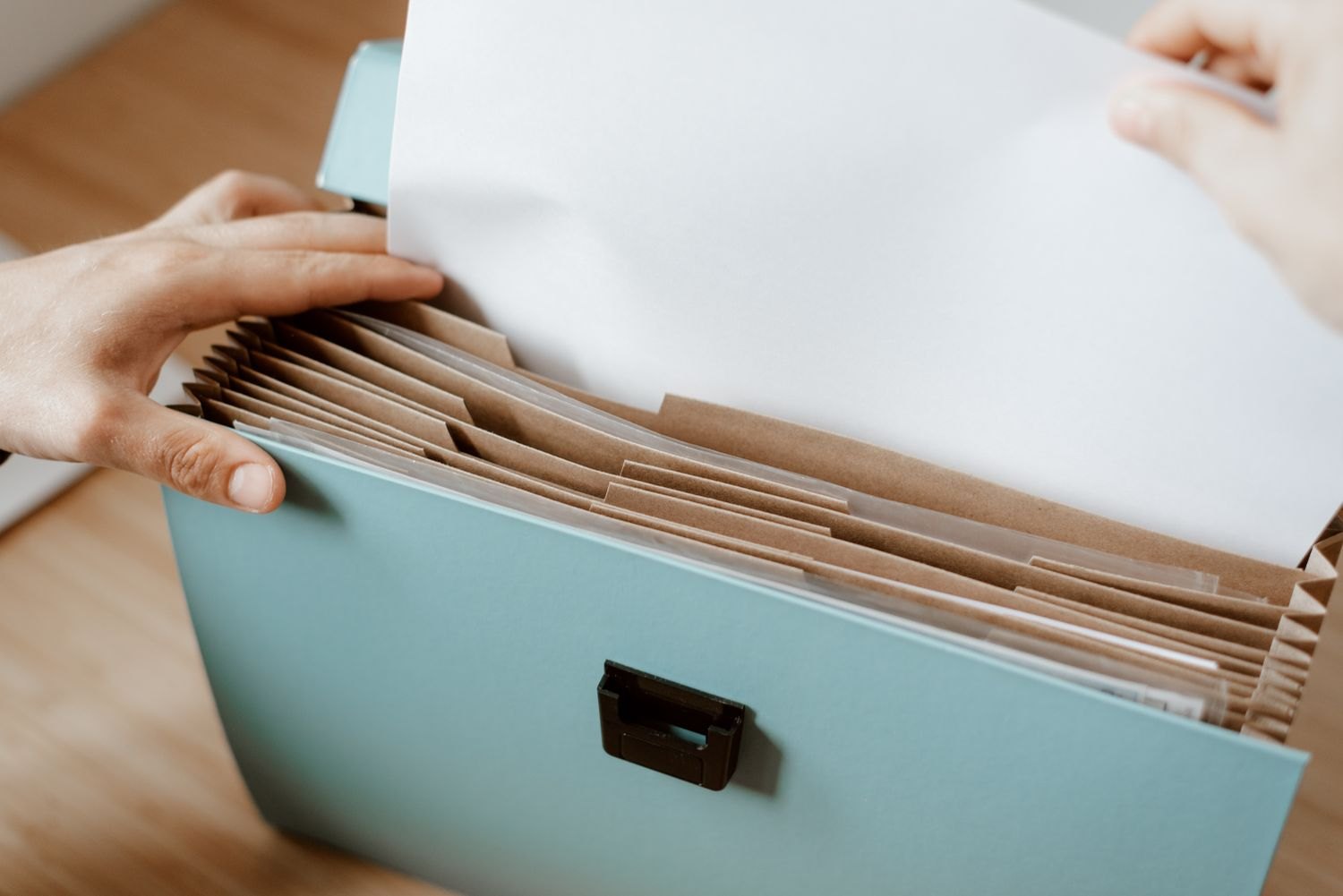
Create a few understandable archive groups
File completed papers by area of life, such as home, appliances and personal documents. Add subdivisions only where the quantity justifies them. One sheet does not automatically need a folder of its own. In a shared household, identify whose document it is and who should have access.
A chronological order can work within a group. Label folders with a clear subject and the period they cover. Keep original documents whose significance is uncertain in an organised holding place. This filing approach does not establish legal retention periods; any such requirements need checking separately for the document type concerned.
Add digital copies without doubling the disorder
If you scan papers, use understandable filenames containing the date and subject. Check that every page is complete and readable. A poor scan will not help a future search. Save copies in a deliberately chosen, appropriately protected location and arrange a backup of important files.
Where useful, connect paper and digital versions through the same short reference. Do not write passwords on visible folder labels. A brief regular review lets you archive completed matters and identify unnecessary duplicates. Dispose of confidential paper appropriately instead of putting intact documents into publicly accessible recycling.